Yeti ConvAI gives students adaptive, rubric-aligned interactive practice for language proficiency assessments, presentations, interviews, and classroom conversations in 70+ languages, while giving teachers visibility into strengths and areas of improvement through Yeti Co-Pilot.
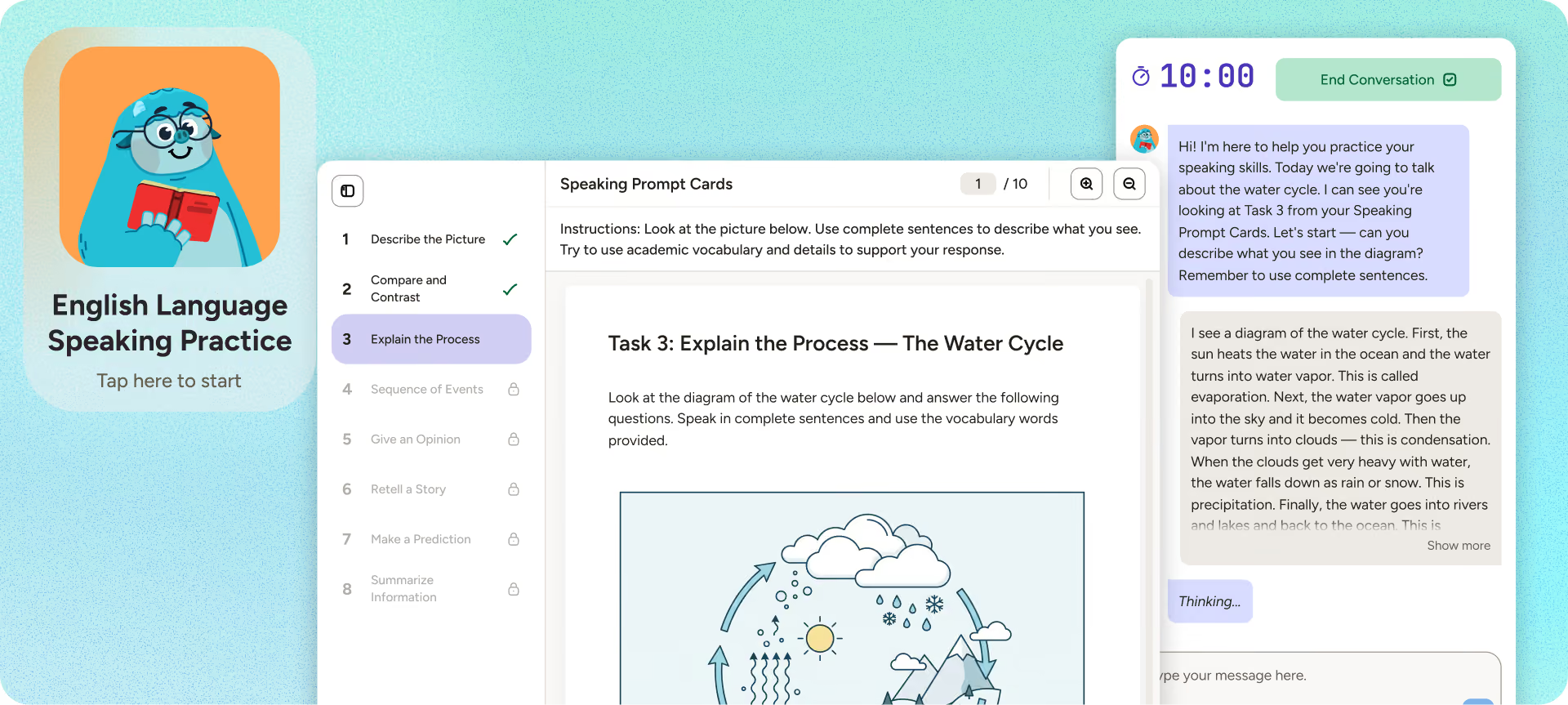
From upper elementary through high school.
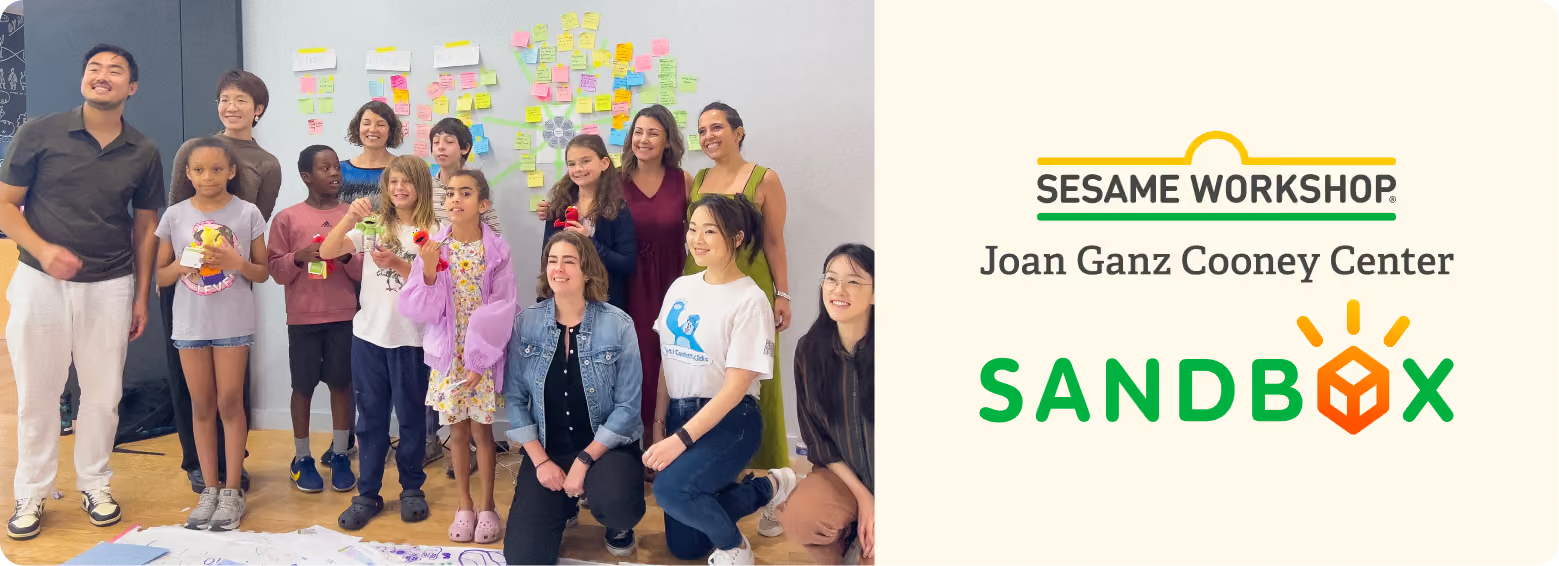
Informed by learner-centered research and collaboration with the Joan Ganz Cooney Center.
Students can speak or type, with live transcription and multilingual support.
Every session flows into Yeti Co-Pilot for teacher review and instructional insight.
Each coach has one job and its own energy. Together they take a student from a first idea to a confident final pitch.
Turns a first idea into a full problem statement and value proposition.
Builds content knowledge with RAG, from stakeholder analysis to market intelligence from credible sources.
Sequences ideas and points into an introduction, a body and a conclusion.
Refines delivery for judges, investors or any other audience.

Instructors define the learning context, curriculum scope and evaluation criteria, so every conversation lines up with the goals and learning objectives.
Retrieval-Augmented Generation (RAG) lets coaches help with brainstorming, in-depth research, interactive role-play and formative quizzes.
Students work with coaches alone or in groups, moving through a co-designed process where coaches hand off to one another as needed
All interaction data is synthesized in Teacher Co-Pilot, for cohort analysis, differentiation, learning gaps and outcomes.

ConvAI session data flows straight into Co-Pilot, so teachers can analyze cohorts, differentiate instruction, and communicate progress.
Progress and skills against your rubric.
Cluster students by need. Plan the next lesson from your existing frameworks.
Growth reports and parent messages in preferred languages.
Bilingual instruction in 70+ languages.
Modelled on the stepped-care approach used in mental health counseling, Yeti ConvAI recognizes when a student needs support and refers them to a trusted adult. It never diagnoses or counsels, so a person stays in the loop at every level. In the process of the protocol, students are encouraged to practice core SEL skills such as self-awareness and help-seeking.
Flags the incident and redirects the conversation. An educator is notified to monitor the student.
Pauses the conversation and recommends the student speak with a trusted adult. An educator is notified to follow up.
Ends the session and alerts the school crisis team. An educator is recommended to speak with the student directly.
General chatbots answer on the fly. Yeti ConvAI works by coaching students toward an instructor set goal, with clear evaluation criteria and immediate feedback to help students try again, improve, and move forward.
| Educational Focus Area | General-purpose Chatbots | Lirvana Labs Yeti ConvAI |
|---|---|---|
| Learning Objectives | Unstructured and lacks curriculum alignment; the conversation drifts wherever the student dictates. | Instructor defines the learning context, curriculum scope, and evaluation criteria. |
| Instructional Scaffolding | Bypasses guided learning by simply answering the question that was asked. | Guides with gentle prompts and structured thinking without giving the answers. |
| Pedagogical Persona | Uses a single, static voice unsuited for varied learning tasks. | Matches tone to the task (e.g., fun for brainstorming, inquisitive for research). |
| Curriculum Sequencing | Provides one generic assistant for all requests, lacking a structured progression. | Provides a co-designed sequence of coaches to move students from brainstorming to final pitch. |
| Critical Thinking Facilitation | May offer its own opinions rather than fostering independent student analysis. | Stays neutral, acknowledges the student’s view, and asks for evidence. |
| Student Safeguarding | Relies on general-audience safeguards rather than school-specific protocols. | Uses a three-level protocol to flag conversations to educators or the school crisis team. |
| Formative Assessment Data | Provides no educator visibility; chat history remains completely private to the student. | Synthesizes session data into engagement metrics, growth reports, and groupings for the teacher. |
Partnering with the Sandbox for Literacy Innovations at the Joan Ganz Cooney Center at Sesame Workshop shaped concrete improvements to our Grades 4–12 conversational AI writing coach.
Agents chunk feedback, limit prompts to one or two questions, break tasks into steps, and match student energy with tailored encouragement.
For interpretation or feelings questions, agents acknowledge the student’s view, guide them to cite text evidence, stay neutral, and support any reasonable reading.
Brainstorm is fun. Research is inquisitive. Pitch training is persuasive. Each modality has its own energy, and so does the agent.
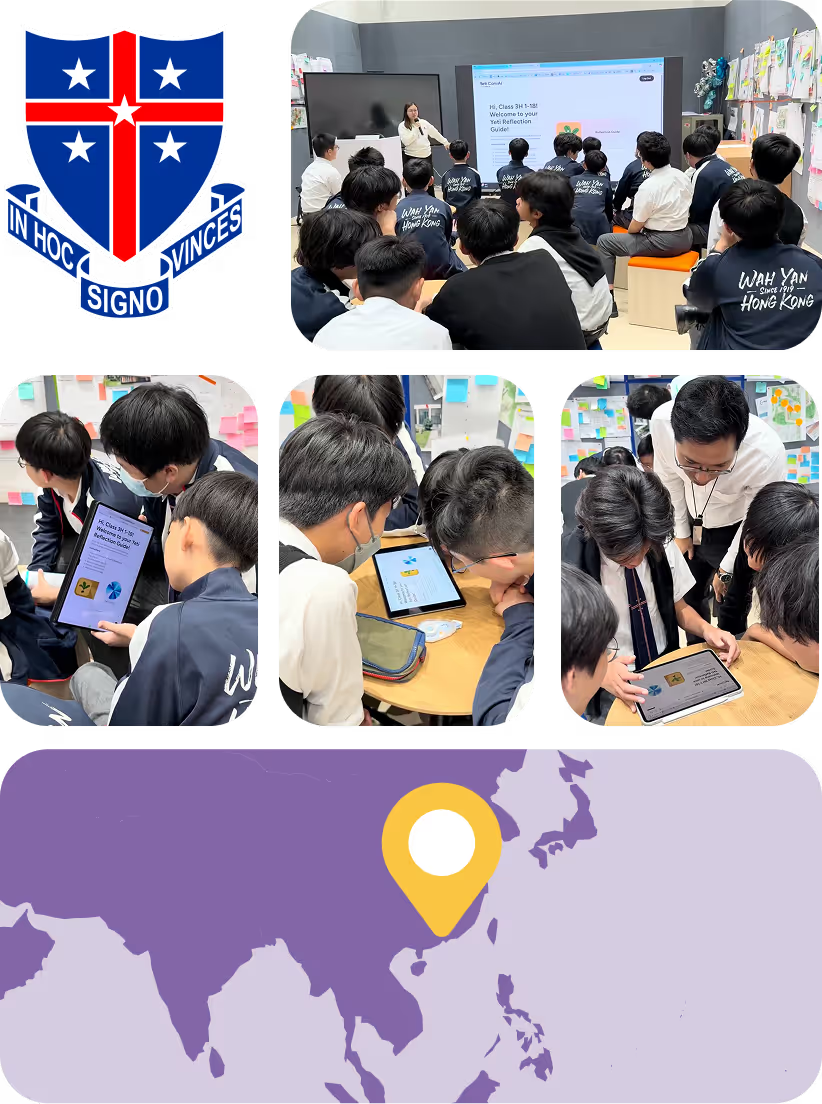
Exclusive entrepreneurship and design thinking courses at Wah Yan College, Hong Kong.
144 students enhanced their innovation and proposal skills through Yeti ConvAI
The system was comprised of 6 adaptive AI agents, each uniquely designed for one of the five stages of design thinking
The AI agents guided students toward teacher-set goals and dynamically adjusted their responses based on student input during the conversation
Students’ abilities are continuously reinforced through real-world projects
Students chose between 6 Agents
Ideation Coach
Reflection Guide
Research Coach
Innovation Coach
Prototype Coach
Final Pitch Coach
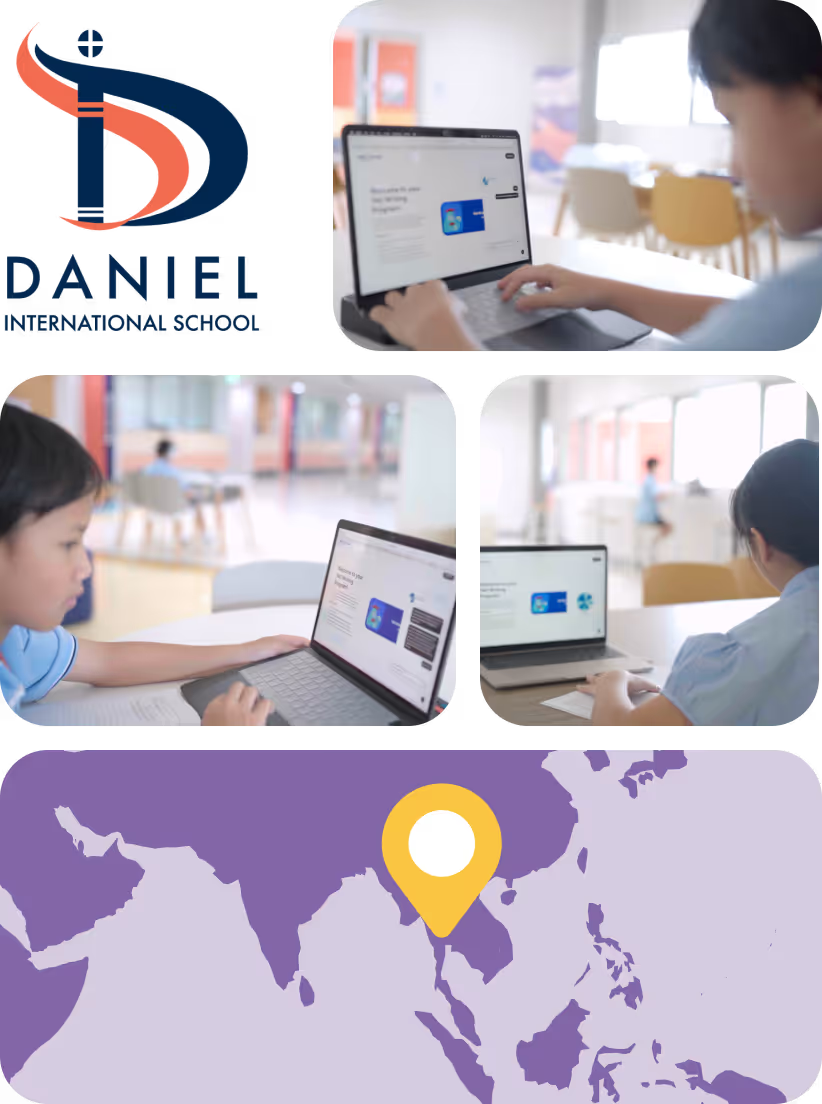
Students used Yeti ConvAI during an informational writing unit to build academic writing structure and language proficiency and compare coming-of-age themes.
Yeti ConvAI Provides
Guided students through brainstorming, drafting, and revising while reinforcing clear essay structure and Grade 6 informational writing expectations
Used ESL-friendly language to model academic phrasing and position revision as a normal part of the writing process
Students were encouraged through guiding questions that supported independent thinking and text-based reasoning
Evaluation & Outcomes
Students were assessed using the Grade 6 Informational Writing Rubric
Teachers observed clearer thesis statements, stronger use of textual evidence, and increased confidence in academic English writing
High-stakes preparation is out of reach for many students. Oxford and Cambridge interview preparation agents make interview coaching, practice and personalised feedback available to a wider range of students, regardless of background or resources.
What students practise
Articulate thinking clearly. Expressing complex ideas with precision and confidence.
Respond to complex questions. Agents challenge students with rigorous, probing questions.
Defend their reasoning. Justifying and elaborating on positions under pressure.
Spontaneous Communication
Expressing Ideas & Collaborating
Oral Communication Fluency
Fluency and Oral Grammar
A superintendent’s office partnered with Lirvana.ai and the district’s counselors and scholars to co-design a bespoke AI-powered student reflection and analytics platform, purpose-built to operationalize Portrait of a Graduate competencies and Performance-Based Assessment frameworks. Rather than deploying an off-the-shelf tool, Lirvana.ai embedded students as co-designers from day one, ensuring the platform reflects real student voice, cultural responsiveness, and instructional reality.
Book a walkthrough to see how conversation-based practice works for your grade level and curriculum.

COPPA, FERPA, and ERMA Certified



© 2026 Lirvana Labs Inc. All rights reserved.